Fix the System, Not the Women by Laura Bates
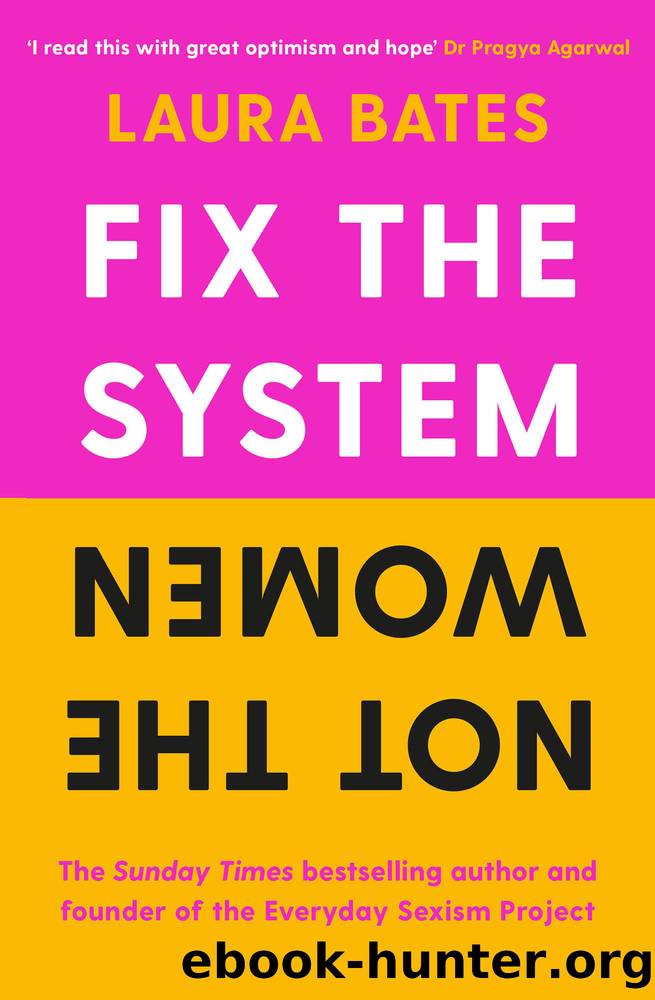
Author:Laura Bates [Bates, Laura]
Language: eng
Format: epub
ISBN: 9781398514348
Publisher: SimonSchuster
Published: 2022-05-12T00:00:00+00:00
PUTTING THE VICTIM ON TRIAL
Policing is not the only broken institution. In the past few years, we have witnessed a shocking collapse in the volume and percentage of rape allegations resulting in a prosecution. Since 2016â17, rape prosecutions have plummeted to an unprecedented low: in 2020â21, there were just 1,557 prosecutions in England and Wales, despite over 55,000 cases being reported to police. Charges in rape cases are now exactly half what they were in 2015â16, representing an alarmingly rapid decline. In a landmark report on âthe decriminalisation of rapeâ, leading womenâs charities set out a powerful argument that rape cases were being dropped when they shouldnât be. The report included a devastating dossier of rape cases the CPS had decided not to charge, including a woman held at knifepoint, a woman whose rape was filmed, with footage found on the suspectâs phone, and a case for which the CPSâs reason not to bring charges was that the survivor âenjoyed an adventurous sex lifeâ.
What was most concerning was the allegation in the report that CPS guidance and training had shifted dramatically in recent years, with prosecutors encouraged to remove âweakâ rape cases that might be âless likely to find favour with a juryâ. âIf we took 350 weak cases out of the system, our conviction rate goes up to 61 per cent,â as one whistle-blower said they were instructed in a training session.
The problem with this approach is that, once again, it aligns a system (in this case, our justice system) with the insidious ideas that are rampant in our society. Gender stereotypes, myths about sexual violence, notions of who is âasking for itâ and confusion about consent. Around the same time that whistle-blowers claimed the training shifted, guidance encouraging prosecutors to take a âmerits-based approachâ to cases, instead of making charging decisions based on how a jury might respond, disappeared from the CPS website and training manuals. And the dates correspond directly with the significant decrease in the numbers of suspects charged, starting in 2017â18.
âMany colleagues have positively embraced the âbookmakerâs approachâ to charge,â noted a whistle-blower. âThey feel empowered to stop the prosecution of more âdifficultâ cases, which, based on their previous experience, have little prospect of resulting in a successful outcome at trial, such as so-called âstudent rape casesâ involving alcohol.â
âSexual offenders often target vulnerable victims, such as children, people with disabilities and people with chaotic lifestyles, because they know it is unlikely that they will be believed by a jury,â the whistle-blowerâs statement noted. If prosecutors are playing a guessing game about potential juror prejudices, those already-marginalised victims are likely to be worst affected.
But itâs okay. Have you guessed why? Thatâs right, there was a review. A judicial review brought by campaigners from the End Violence Against Women Coalition (EVAW), supported by the Centre for Womenâs Justice. And, without engaging in any meaningful way with the extensive evidence put forward by the EVAW, the judges (mostly men, of course) decided that the CPS had neither acted
Download
This site does not store any files on its server. We only index and link to content provided by other sites. Please contact the content providers to delete copyright contents if any and email us, we'll remove relevant links or contents immediately.
This Is Your Brain on Birth Control by Sarah Hill(569)
The Dance of Life by Magdalena Zernicka-Goetz(509)
Beyond the Abortion Wars by Charles C. Camosy(303)
Scarlet A by Katie Watson(288)
Handbook for a Post-Roe America by Robin Marty(281)
Birth Control by Beth L. Sundstrom(280)
A Critical Introduction to the Ethics of Abortion by Cantens Bernie(243)
Protectors of the Code: The Christmas Day Abortion Clinic Bombing by E. Michael Jones(211)
Fix the System, Not the Women by Laura Bates(173)
Empire of the Senseless by Kathy Acker(118)
We Who Are About To . . . by Joanna Russ(100)
Embrace Your Power by Louise Hay(73)
Babes in Boyland by Gina Barreca(58)
The Glass Ledge by Iman Oubou(44)
Women's Wit and Wisdom by Unknown(41)
Once a Girl, Now a Woman by Nikki Rowe(39)
Women Moving Forward : Volume One by Raúl Fernández-Calienes; Judith Barr Bachay(39)
Jewelry Box by Aurelie Sheehan(38)
Women in Beckett: Performance and Critical Perspectives by Linda Ben-Zvi (Editor)(37)
